Xander Jenkins · 7 October 2026
Shifting Atmospheric Currents Resculpt Moroccan Dune Structures and Drive Ecosystem Adjustments
Wind regimes across Morocco's desert regions have shown measurable alterations in direction, velocity, and seasonality over recent decades, and these modifications continue to influence sand dune morphology in areas such as the Erg Chebbi and Erg Chigaga. Data from satellite monitoring programs indicate that prevailing northeasterly flows have strengthened in certain months while seasonal gust events from the south have increased in frequency, and researchers attribute these patterns to broader atmospheric circulation changes documented by multiple meteorological networks.
Observed Shifts in Wind Behavior
Records compiled by Moroccan meteorological stations reveal that average wind speeds in the southeastern desert zones rose by approximately 0.8 meters per second between 2000 and 2024, while the proportion of days with winds exceeding 10 meters per second grew from 12 percent to 19 percent during the same interval. These measurements align with findings from regional climate models that project continued intensification through the coming years, including projections tied to conditions observed in October 2026 when anomalous pressure gradients produced sustained high-velocity events across the Atlas foothills and adjacent lowlands.
Seasonal timing has also changed, and spring months now account for a larger share of total annual wind energy than they did two decades earlier. This redistribution matters because dune surfaces experience the greatest sediment transport when vegetation cover remains minimal after winter dormancy, and prolonged exposure to stronger flows accelerates crest migration and flank steepening.
Landscape Responses and Dune Evolution
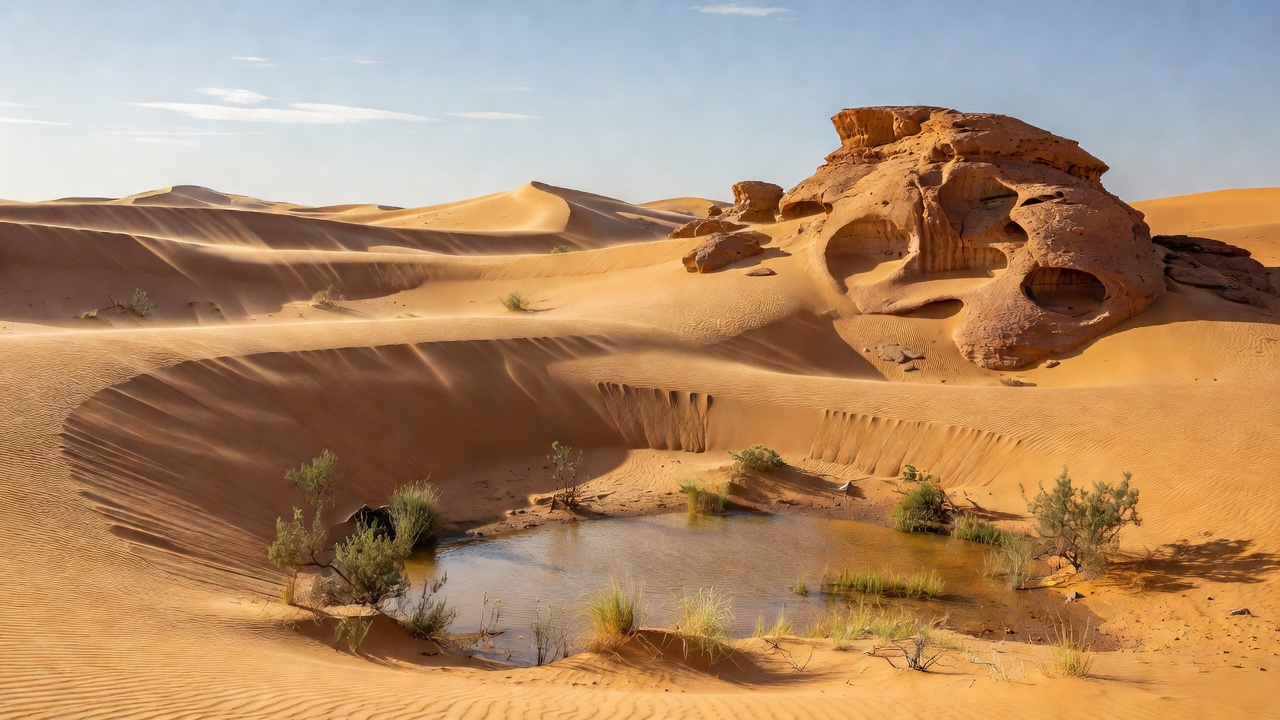
Dune fields respond directly to these altered forces through accelerated migration rates and modified crest alignments. Field surveys conducted by geomorphology teams show that barchan dunes in the Merzouga vicinity advanced an average of 18 meters per year during the 2015–2025 period, up from 11 meters per year in the preceding decade. Linear dunes have developed more pronounced sinuosity, and researchers note the emergence of secondary slip faces oriented perpendicular to the primary ridge axis.

These morphological adjustments alter surface albedo and local heat fluxes, which in turn influence boundary-layer turbulence. One study from a North African research consortium documented a 7 percent increase in near-surface temperature variability within active dune corridors compared with stabilized areas, and the difference correlates with measured changes in sand grain sorting and surface roughness.
Ecological Consequences Across Trophic Levels
Vegetation communities adapted to specific sand stability regimes face displacement as dune fronts advance or retreat. Haloxylon and Zygophyllum species that once anchored interdune depressions now encounter shifting substrates at rates that exceed their colonization capacity, and monitoring plots established in 2018 show a 23 percent decline in perennial cover within the most mobile zones. Annual species exhibit greater resilience yet display altered flowering phenology tied to modified moisture retention in reconfigured dune flanks.
Faunal responses follow vegetation shifts, and invertebrate assemblages dependent on stable microhabitats decline where slip-face angles steepen. Lizard populations that utilize specific sand compaction levels for burrowing have redistributed toward remnant fixed dunes, while certain bird species that nest in interdune flats encounter increased exposure to wind-driven sand abrasion during breeding seasons. Data collected by biodiversity monitoring networks indicate these movements concentrate individuals into smaller habitat patches, raising local competition intensity.
Soil nutrient cycling experiences secondary effects because wind redistribution changes the spatial pattern of organic matter deposition. Areas receiving increased sand burial lose surface carbon stores at higher rates, whereas zones of sand deflation expose previously buried material that becomes available for microbial processing. These processes operate on timescales of several years, and cumulative impacts on primary productivity remain under active quantification.
Broader Regional Context and Monitoring Efforts
Similar wind-driven landscape changes appear in neighboring Saharan sectors, yet Morocco's combination of protected areas and ongoing meteorological instrumentation provides unusually detailed records for analysis. Collaborative programs involving the Moroccan Ministry of Energy Transition and Sustainable Development together with European research institutions have expanded sensor arrays since 2022, and the resulting datasets now support refined transport models that incorporate both large-scale circulation and local topographic steering.
Projections through 2030 suggest continued dune crest migration at rates 30 to 50 percent above historical baselines, and these forecasts incorporate the October 2026 wind anomalies as calibration points. Such trends carry implications for infrastructure siting, groundwater recharge zones, and the viability of existing conservation boundaries.
Conclusion
Wind pattern variations continue to reshape Moroccan desert formations through measurable increases in speed, directional persistence, and seasonal concentration, and these physical alterations propagate through vegetation, soils, and animal communities via direct habitat modification and indirect resource redistribution. Ongoing instrumentation and field validation efforts supply the quantitative foundation needed to track these coupled geomorphic and ecological dynamics as they unfold.