Ben Frank · 6 November 2026
Ancient Pollen Deposits Within Dune Structures Illuminate Millennia of Environmental Shifts Influencing Modern Biodiversity Regions
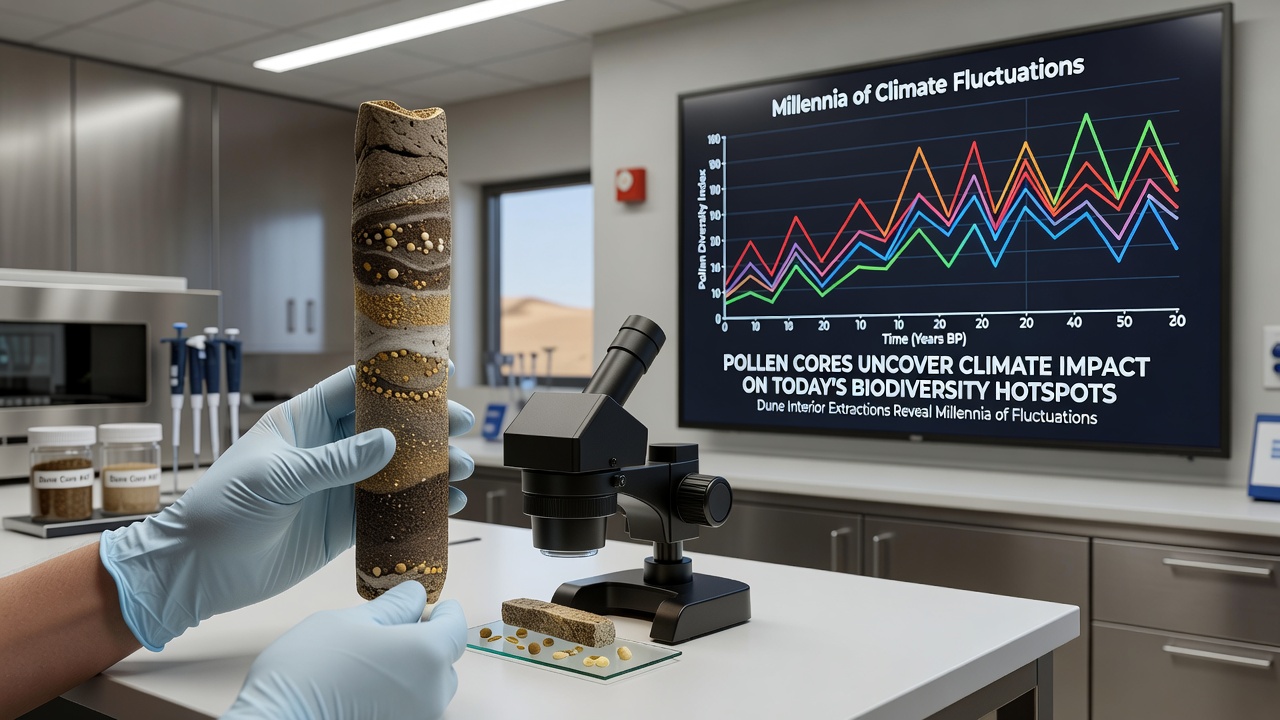
Pollen cores extracted from dune interiors provide direct records of vegetation changes spanning thousands of years, and these sequences connect past climate variations to the distribution of species in current biodiversity hotspots across desert and semi-arid zones. Scientists drill into stabilized dune bodies where wind-deposited sediments have trapped organic material, then analyze layered pollen grains to reconstruct temperature and precipitation patterns that shaped ecosystems long before modern observation began.
Extraction Techniques and Preservation Conditions
Teams use specialized coring equipment to reach depths of several meters inside dunes where organic preservation remains high because of low oxygen levels and minimal microbial activity. The process yields continuous sequences that capture shifts between grassland expansion during wetter intervals and shrub dominance during arid phases, while researchers cross-reference these layers with radiocarbon dating and optically stimulated luminescence to establish precise timelines. Data from such cores often reveal multi-century droughts followed by rapid vegetation recovery, patterns that align with independent records from lake sediments and ice cores in distant regions.
Preservation works best in dunes that have remained relatively stable for millennia, allowing pollen to accumulate without repeated reworking by wind. Observers note that certain dune fields in the southwestern United States and central Australia contain particularly rich archives because their internal structures escaped major disturbance during the Holocene.
Climate Fluctuations Documented in the Record
Sequences extracted from multiple sites show repeated transitions between cooler, moister conditions and extended dry periods over the past twelve thousand years. These fluctuations coincide with changes in monsoon strength and shifts in westerly wind patterns that altered moisture delivery to interior basins. One study published in late 2025 traced a pronounced arid interval around 4,200 years ago that reduced woodland cover across large portions of what are now recognized biodiversity hotspots, and similar signals appear in cores taken from dune fields on three continents.
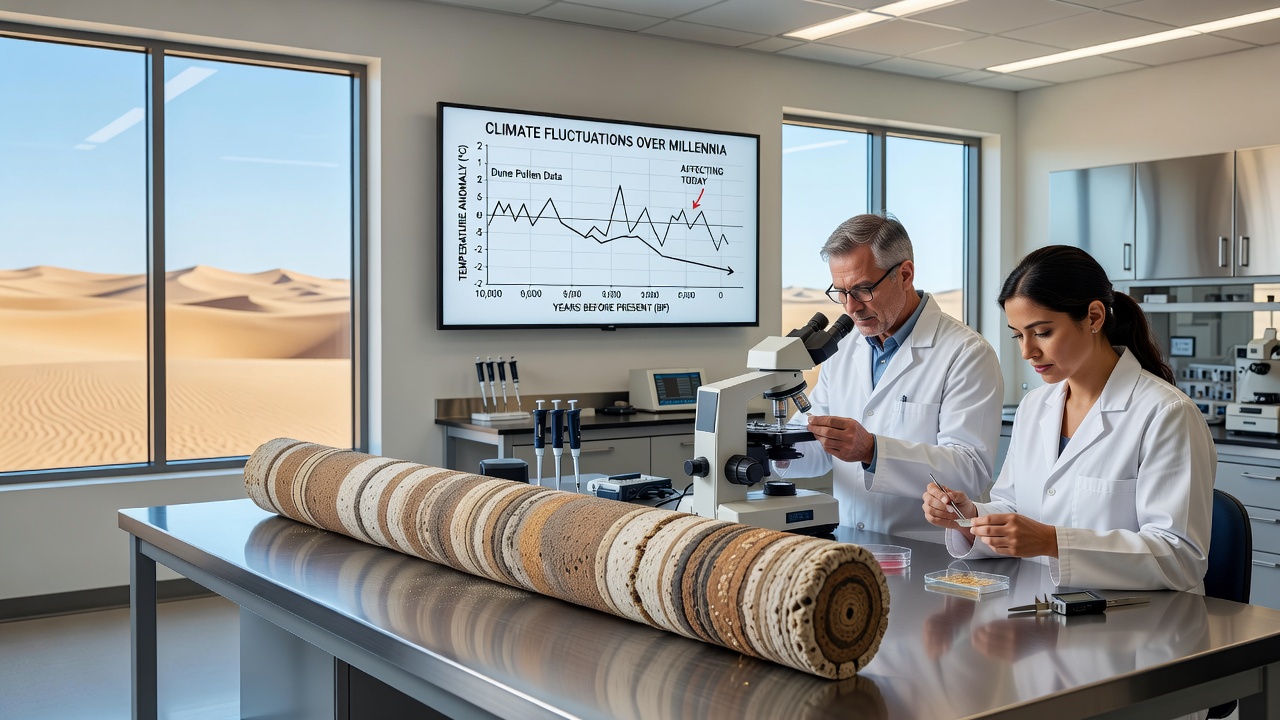
Researchers compare pollen percentages of key indicator species such as pine, oak, and various grasses to quantify how far vegetation zones migrated during each climate episode. The resulting maps demonstrate that many present-day centers of endemism occupy locations that served as refugia during past dry phases, allowing species to persist while surrounding areas experienced local extinctions. November 2026 fieldwork campaigns are scheduled to extend sampling into additional dune systems in the Kalahari and the Great Basin to test whether the same refugia patterns hold at broader scales.
Links to Contemporary Biodiversity Patterns
Modern biodiversity hotspots frequently overlap with locations where pollen records indicate repeated survival through extreme climate swings. Species richness in these areas reflects both long-term persistence and the ability of certain lineages to recolonize adjacent habitats once conditions improved. Genetic studies of plants and invertebrates in these zones often reveal divergence times that match the climate episodes identified in the dune cores, providing independent confirmation that historical environmental stress shaped current population structures.
According to findings from the United States Geological Survey, dune-interior pollen data have helped refine models that predict how future drying trends may affect vegetation corridors connecting isolated habitat patches. These models incorporate the same multi-millennial cycles documented in the cores rather than relying solely on short instrumental records.
Integration with Broader Paleoclimate Research
Pollen data from dunes complement records obtained from speleothems, tree rings, and marine sediments, creating a more complete picture of regional climate dynamics. When combined, these datasets show that dune systems responded sensitively to both global-scale forcings such as orbital changes and regional factors including sea-surface temperature variations. Analysts at institutions including Australia's national science agency have used such integrated datasets to calibrate regional climate simulations that extend backward through the Holocene.
Recent sampling campaigns have also identified microcharcoal particles within the same cores, offering evidence of past fire regimes that further influenced vegetation composition and species survival. These fire signals align with periods of heightened aridity reconstructed from the pollen itself, reinforcing the connection between climate variability and ecosystem processes.
Conclusion
Pollen cores from dune interiors continue to supply high-resolution evidence of climate fluctuations that determined which species survived in particular locations over thousands of years. The spatial overlap between these ancient refugia and today's biodiversity hotspots supplies a factual basis for understanding how long-term environmental change continues to influence present-day species distributions and community composition. Ongoing fieldwork through 2026 will add new sequences from under-sampled regions, expanding the geographic coverage of these records and strengthening connections between past climate dynamics and current conservation priorities.